Bathroom renovations in Chicagoland have evolved far beyond simply replacing a vanity and re-tiling the floor. Today's suburban homeowners — from Northbrook to Palatine, Wilmette to Schaumburg — are investing in bathrooms that feel like personal retreats. Whether you are updating a powder room, overhauling a hall bathroom, or creating the primary suite of your dreams, understanding the current trends will help you make decisions you will be happy with for years to come.
At CrestLine Home Pro, we complete dozens of bathroom renovations across the North Shore and Northwest Suburbs every year. Here are the five most popular trends we are seeing in 2026, along with practical advice on how to incorporate them into your home.
1. Spa-Inspired Walk-In Showers
The oversized soaking tub that dominated bathroom design for decades is losing ground to spacious walk-in showers. Chicagoland homeowners are choosing curbless or low-threshold entries, frameless glass enclosures, and rain-head shower systems that transform a daily routine into a spa experience.
The practical benefits are significant. A walk-in shower takes up less floor space than a tub-shower combination, making it ideal for the modestly sized bathrooms common in 1960s and 1970s North Shore colonials and split-levels. Curbless designs also improve accessibility — an increasingly important consideration for homeowners who plan to age in place or have family members with mobility concerns.
Popular finishes we are installing include large-format porcelain tiles (24x48 or 12x24) in matte finishes, linear drain systems that keep the floor completely flat, and built-in recessed niches for shampoo and soap. Brushed gold and matte black fixtures from brands like Delta, Kohler, and Brizo add a modern contrast against neutral tile palettes.
CrestLine Home Pro handles every aspect of walk-in shower installation — from waterproofing the substrate with Schluter or Laticrete membrane systems to setting tile, installing glass, and connecting plumbing. Proper waterproofing is absolutely critical in a curbless design, and it is one of the areas where hiring an experienced professional makes the biggest difference in long-term durability.
What It Costs
A walk-in shower conversion in a typical Chicagoland bathroom runs $5,000 to $15,000 depending on size, tile selection, and fixture grade. A curbless design with a linear drain sits at the higher end because of the additional substrate work required.
2. Warm, Natural Material Palettes
The all-white, subway-tile-and-marble bathroom is giving way to warmer, more organic palettes. Homeowners in Highland Park, Glenview, and Barrington are gravitating toward earthy tones — warm greige, soft taupe, sage green, and terracotta — paired with natural wood accents.
Floating wood vanities (or vanities with wood-look melamine for moisture resistance) are replacing painted cabinets as the focal point. Matte porcelain tile that mimics limestone, travertine, or concrete creates a grounded, calming atmosphere without the maintenance challenges of natural stone.
Hardware and fixtures in brushed brass or champagne gold tie the warm palette together. Matte black remains popular but is increasingly used as an accent rather than the dominant fixture finish. Round mirrors, woven baskets, and live plants add the finishing organic touches that complete the look.
This trend is especially well-suited to the architecture of suburban Chicagoland homes. The warm tones complement the hardwood floors and natural light found in many North Shore properties, creating a seamless visual flow from hallway to bathroom.
3. Statement Tile Walls and Floors
While large-format neutral tile dominates shower enclosures, homeowners are getting bolder with accent walls and floor patterns. Zellige (hand-fired Moroccan tile), geometric patterns, and textured three-dimensional tile are appearing in powder rooms and as shower accent walls throughout Chicagoland.
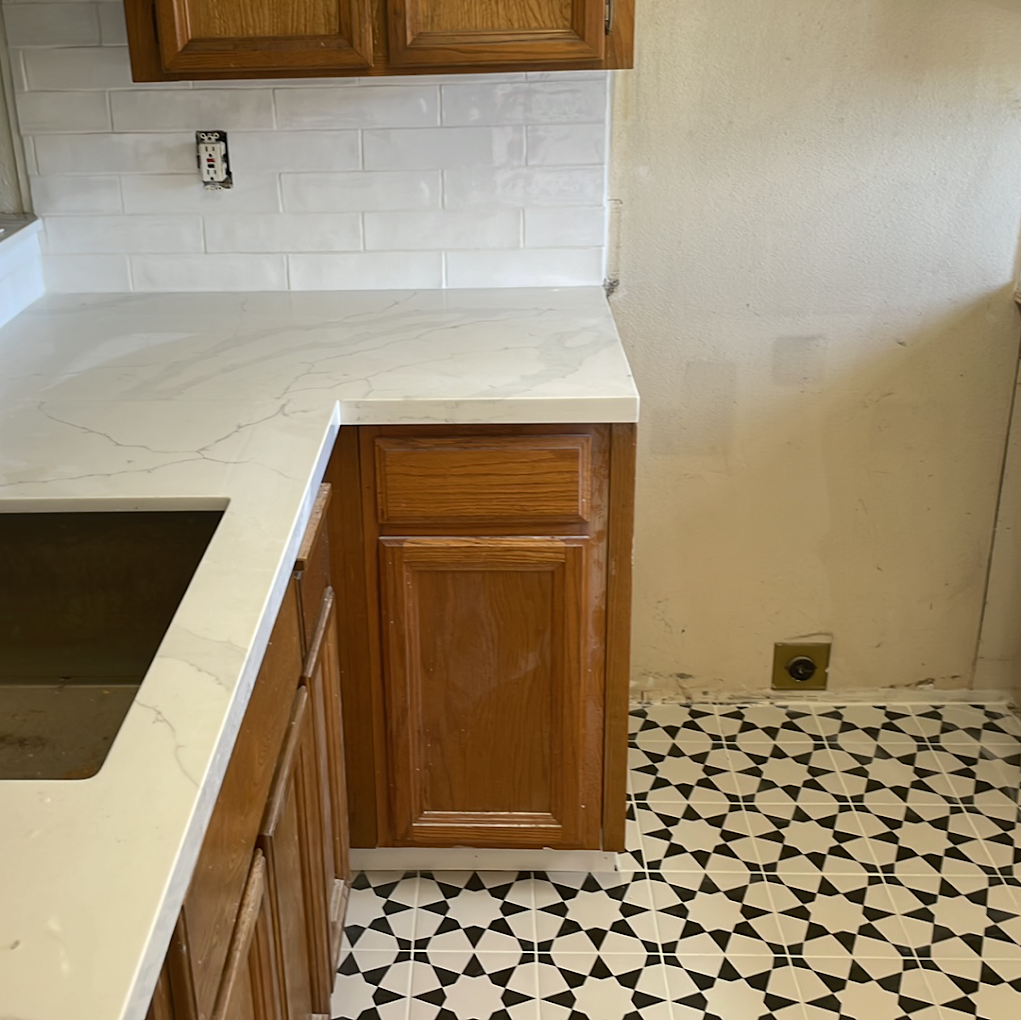
Patterned cement-look porcelain floor tile is another strong trend, particularly in powder rooms and hall bathrooms where a smaller square footage makes a bold pattern feel intentional rather than overwhelming. Black-and-white encaustic patterns and Moroccan-inspired designs are the most popular choices we see.
The key to making a statement tile work is restraint elsewhere. Pair a bold floor with simple, solid-color wall tile and minimalist fixtures. Let the tile be the star. This approach keeps the room feeling curated rather than chaotic, and it gives you a conversation-starting element without committing the entire room to a trend that may feel dated in ten years.
Professional Installation Matters
Statement tiles — especially handmade options like zellige — require more skill to install than standard field tile. Irregular edges, slight size variations, and the need for precise grout joint widths mean this is not a weekend DIY project. CrestLine Home Pro's tile specialists have extensive experience with artisan and specialty tiles, ensuring the finished result looks exactly as you envisioned.
4. Smart Technology Integration
Smart home technology has reached the bathroom, and Chicagoland homeowners are embracing it. The most popular upgrades we install include:
- Heated floors — Electric radiant floor mats installed beneath tile are the single most requested upgrade in Chicagoland bathroom renovations, and for good reason. Stepping onto a warm tile floor on a January morning in Illinois is a luxury that costs surprisingly little — typically $500 to $1,500 for materials plus installation labor.
- Smart mirrors — LED-backlit mirrors with built-in defoggers, dimming controls, and even Bluetooth speakers are replacing basic plate-glass mirrors. Brands like Krugg and Electric Mirror offer options from $300 to $2,000+.
- Digital shower controls — Systems from Moen (U by Moen) and Kohler (DTV+) allow you to preset your exact water temperature and flow settings and activate them from a wall panel or your phone.
- Motion-sensor faucets and lighting — Touchless faucets (originally popularized in commercial settings) are now available in residential styles that match any design aesthetic. Paired with motion-sensor vanity lighting, they add convenience and energy efficiency.
- Smart toilets — Bidet-style smart toilets with heated seats, self-cleaning functions, and automatic lids (from TOTO, Kohler, and Bio Bidet) are increasingly popular, particularly in primary bathrooms.
The important thing to plan for with smart bathroom features is electrical. Most older Chicagoland homes do not have enough outlets or dedicated circuits in the bathroom to support heated floors, a smart mirror, and a smart toilet simultaneously. CrestLine Home Pro's licensed electricians evaluate the panel capacity and existing wiring during our initial consultation so we can include any necessary electrical upgrades in the project proposal.
5. Aging-in-Place Design That Looks Beautiful
An increasing number of our Chicagoland clients are asking for aging-in-place features — but they want those features to look stylish, not institutional. Modern manufacturers have responded with products that blend seamlessly into high-end bathroom design.
Grab bars now come in designer finishes (matte black, brushed gold, polished nickel) and architectural styles that look like towel bars rather than medical equipment. Comfort-height toilets (17 to 19 inches) are now the default in most bathroom lines. Curbless showers, which we discussed as Trend #1, are inherently accessible. Non-slip tile with a matte or textured finish provides traction without looking or feeling like a clinical surface.
Wider doorways (at least 32 inches clear), lever-style door handles, and open-concept vanity designs that allow wheelchair or walker clearance are additional features that improve accessibility while maintaining a clean, modern aesthetic.
For families caring for aging parents or planning to remain in their homes long-term, incorporating these features during a renovation is far more cost-effective than retrofitting later. CrestLine Home Pro is experienced with ADA-compliant and universal-design projects and can guide you through the options that make sense for your household.
Budgeting for Your Bathroom Renovation
A full bathroom renovation in Chicagoland typically costs between $12,000 and $35,000 for a hall or guest bathroom and $20,000 to $55,000+ for a primary bathroom with high-end finishes. Powder room updates run $5,000 to $12,000. These ranges reflect the mid-range to upper-mid-range materials most popular in the suburbs.
The factors that have the biggest impact on cost are tile selection (natural stone vs. porcelain), fixture grade (builder-grade vs. designer), and whether you are changing the layout or footprint of the room. Keeping the toilet, vanity, and shower in their current positions saves thousands by avoiding the need to relocate plumbing rough-ins.
Get Started with a Free Consultation
Whether you are ready to commit to a full renovation or simply want to explore what is possible, CrestLine Home Pro offers free in-home consultations for Chicagoland homeowners. Our team will assess your existing bathroom, discuss your wishlist, and provide a detailed written estimate.
Call (630) 812-7247 or schedule your free estimate online. Let us help you create a bathroom that feels like your own personal retreat — right here in the Chicago suburbs.