Chicagoland weather is unforgiving on inefficient homes. Lake-effect winters with subzero windchills, humid summers requiring constant air conditioning, and freeze-thaw cycles that destroy poorly-built envelopes all conspire to drive up energy bills. The good news: 2026 brings significant federal tax credits under the Inflation Reduction Act (IRA) for energy-efficient home improvements — credits that can offset 30% or more of project costs.
This guide covers the energy-efficient renovations with the highest ROI for Chicagoland homes, the 2026 tax credit eligibility, and the order in which to tackle them for maximum efficiency.
2026 Energy Efficient Home Improvement Credit (Section 25C)
The IRS Energy Efficient Home Improvement Credit, expanded under the IRA, provides up to $3,200 per year in tax credits for qualifying upgrades. Key 2026 limits:
- Insulation, air sealing, doors: 30% of cost, up to $1,200/year
- Windows and skylights: 30% of cost, up to $600/year
- Energy audits: 30% of cost, up to $150/year
- Heat pumps: 30% of cost, up to $2,000/year
- Heat pump water heaters: 30% of cost, up to $2,000/year (combined with heat pump cap)
- Electric panel upgrades: 30% of cost, up to $600/year (if supporting other qualifying upgrades)
Maximum total per year: $3,200 (limits stack). Importantly, this is an annual credit — you can take it again next year for additional qualifying upgrades. Many Chicagoland homeowners stage improvements across 2-3 tax years to maximize total credits.
Always consult a tax professional. CrestLine is a contractor, not a tax advisor. Credits are based on current law as of 2026.
Step 1: Energy Audit ($300-$500, eligible for $150 credit)
Before any energy upgrade, get an energy audit. An ENERGY STAR-certified energy auditor performs blower door testing, infrared thermal imaging, and combustion safety testing. The audit identifies your home's specific energy weak points — most Chicagoland homes have surprising issues hidden behind walls.
The audit typically costs $300-$500 in Chicagoland and is eligible for a 30% federal tax credit up to $150. The information it provides usually saves $1,000-$3,000 by directing your investment to the highest-impact upgrades.
Step 2: Air Sealing ($800-$3,500, eligible for credit)
Most Chicagoland homes lose 25-40% of their conditioned air through small leaks: around windows, through electrical outlets, at rim joists, around plumbing penetrations, and through attic hatches. Professional air sealing closes these leaks with caulk, expanding foam, weather-stripping, and door sweeps.
Air sealing returns its investment in 18-36 months through utility savings, eligible for 30% IRA credit up to $1,200 (combined with insulation). Often the highest-ROI energy upgrade per dollar.
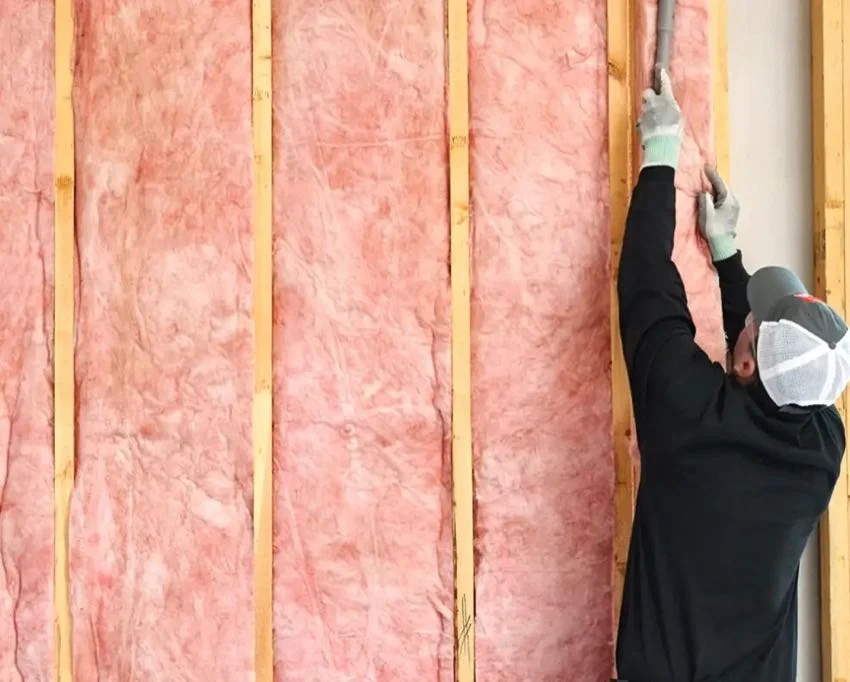
Step 3: Attic Insulation ($1,500-$5,000, eligible for credit)
Insulation is rated by R-value (resistance to heat flow). The 2025 International Energy Conservation Code requires R-49 in Chicagoland attics. Most homes built before 2000 have R-19 to R-30. Adding insulation to bring attics up to R-49 returns its investment in 4-7 years and significantly improves winter comfort.
Cost in Chicagoland: $1,500-$3,500 for blown-in cellulose (most common), $2,500-$5,000 for spray foam. Both eligible for 30% IRA credit up to $1,200 (combined with air sealing).
Step 4: Window Replacement ($8,000-$25,000, eligible for credit)
Replacing single-pane windows with modern double or triple-pane low-E argon-filled windows reduces heat loss by 50-70%. Chicagoland homeowners feel the difference immediately: less drafts, less window-frost, more comfortable rooms near windows. Bonus: dramatically reduces outside noise.
Per-window cost installed: $700-$1,800 depending on size, material (vinyl, fiberglass, wood-clad), and complexity. Federal credit: 30% up to $600 per year for windows specifically. State of Illinois has additional rebates through some utility companies.
Best ROI move: replace windows in stages — most-used rooms first (primary bedroom, kitchen, living room), holding windows in less-used rooms for a later year to spread credit benefits across tax years.
Step 5: Heat Pump HVAC ($15,000-$35,000, eligible for $2,000 credit)
Heat pumps are the most-disruptive but highest-impact energy upgrade. Modern cold-climate heat pumps (Mitsubishi Hyper-Heating, Carrier Greenspeed, Bosch IDS Premium) work efficiently in Chicagoland temperatures down to -15°F. They replace both your furnace AND air conditioner with a single system that is 3-4x more efficient than gas-fired heat at most temperatures.
For Chicagoland: the smart play is a "dual-fuel" or "hybrid" heat pump system. The heat pump handles 80% of heating hours; the existing gas furnace handles the coldest 20%. Combined system efficiency is significantly higher than either system alone.
Cost: $15,000-$25,000 for hybrid system retrofit; $25,000-$35,000 for full electrification with backup electric heat. Federal credit: 30% up to $2,000. Illinois utility rebates: $1,500-$2,500 additional.
Step 6: Heat Pump Water Heater ($3,500-$5,500, eligible for credit)
Heat pump water heaters are 3-4x more efficient than electric resistance water heaters and 2x more efficient than gas. They live in basements (warm air becomes hot water; cool air output is a basement-cooling bonus). For Chicagoland homes with electric resistance water heaters, the upgrade pays back in 4-6 years.
Cost: $3,500-$5,500 installed. Federal credit: 30% up to $2,000 (combined cap with heat pump HVAC, so if you take maximum on HVAC, water heater credit is reduced).
Step 7: Electric Panel Upgrade ($2,500-$4,500, conditionally eligible)
Older Chicagoland homes often have 60A or 100A electrical service. Modern energy-efficient upgrades (heat pumps, EV chargers, induction ranges) often require 200A service. The federal credit covers 30% up to $600 of panel upgrade cost — but only when the upgrade is required to enable other qualifying improvements.
Cost: $2,500-$4,500 for 100A → 200A upgrade including new panel, meter base coordination with ComEd, and 4-6 weeks of permitting.
Step 8: Smart Thermostat ($200-$400, eligible for credit)
Smart thermostats (Nest, Ecobee, Honeywell) save 8-15% on annual heating/cooling costs through learning algorithms and automatic setbacks. The newest models support heat pump optimization and integrate with your home electrical panel for whole-home energy monitoring.
Cost: $200-$400 installed. Pays back in 12-24 months on Chicagoland utility bills alone.
What Order Should I Do These In?
The right sequence for most Chicagoland homes:
- Energy audit first. Always. Reveals which upgrades have highest impact for your specific home.
- Air sealing and insulation second. Reduces the heating/cooling load your HVAC system needs to handle.
- Windows third (if necessary). Worth it for single-pane or non-low-E windows; skip if you already have modern double-pane low-E.
- HVAC upgrade fourth. Once the envelope is tight, the right-sized heat pump can be significantly smaller (and cheaper) than if you had upgraded HVAC first.
- Water heater fifth. Independent from envelope work; can be done any time.
- Electrical panel as needed. Often required to support heat pump and other upgrades.
- Smart thermostat last. Maximizes returns once the rest of the system is efficient.
Real Chicagoland Numbers
Across 25+ comprehensive energy-efficient renovations CrestLine has completed since 2024:
- Average pre-upgrade winter heating bill: $380/month (Chicagoland 3-bedroom home)
- Average post-upgrade winter heating bill: $185/month
- Average pre-upgrade summer cooling bill: $220/month
- Average post-upgrade summer cooling bill: $115/month
- Average total annual utility savings: $2,800-$4,200
- Average total project cost: $42,000
- Average federal tax credit captured: $3,200 (max annual)
- Average Illinois utility rebate captured: $2,800
- Payback period: 9-12 years on utility savings alone (faster including credits)
Beyond the financial returns: dramatically improved comfort, lower carbon footprint, and meaningful resale value. ENERGY STAR-certified home buyers will pay 4-9% more for efficient homes per Department of Energy data.
Where to Start
The starting point is the energy audit. We coordinate with three Chicagoland audit firms and include audit results in any energy-renovation proposal. The audit + planning visit is free; the audit itself runs $300-$500 (eligible for $150 federal credit).
To plan your energy-efficient Chicagoland renovation: call (630) 812-7247 or request a free assessment. We'll walk through your home, review your last year of utility bills, and recommend the highest-impact upgrades for your specific situation.