The average two-car garage in Chicagoland has about 400 square feet of space — roughly the size of a studio apartment. Yet most families cannot fit a single car inside because every square inch is consumed by tools, sports equipment, holiday decorations, and general clutter. Sound familiar?
A properly organized garage reclaims that space, protects your vehicles from Chicago winters, and creates a functional workspace. Here is how to do it right.
Step 1: Get Everything Off the Floor
The number one rule of garage organization is vertical storage. Floor space is for cars. Everything else goes on walls or overhead.
Slatwall Panels ($8 to $15 per square foot, installed)
Slatwall is the gold standard for garage walls. PVC slatwall panels mount directly to studs and accept a variety of hooks, baskets, shelves, and brackets that can be rearranged anytime. Unlike pegboard, slatwall holds heavy items securely and resists moisture.
Overhead Ceiling Racks ($200 to $600 per unit, installed)
The ceiling is dead space in most garages. Overhead racks mount to ceiling joists and hold 250 to 600 pounds — perfect for seasonal items, luggage, camping gear, and holiday decorations. Standard racks are 4×8 feet and adjustable in height.
Wall-Mounted Bike Hooks and Racks ($20 to $60 per bike)
A family of four with bikes taking up floor space is losing 15 to 20 square feet. Wall hooks or vertical bike racks eliminate this entirely.
Step 2: Create Functional Zones
- Workbench zone — A sturdy workbench with a pegboard or slatwall behind it for tools. Under-bench storage for power tools and supplies.
- Sports and recreation zone — Dedicated hooks and racks for bikes, skis, golf bags, and kids' sports equipment.
- Garden and outdoor zone — Wall-mounted rack for long-handled tools (rakes, shovels, brooms). Shelf for pots, soil, and supplies.
- Seasonal storage zone — Overhead racks or high shelves for items used only a few times per year.
Step 3: Upgrade the Floor
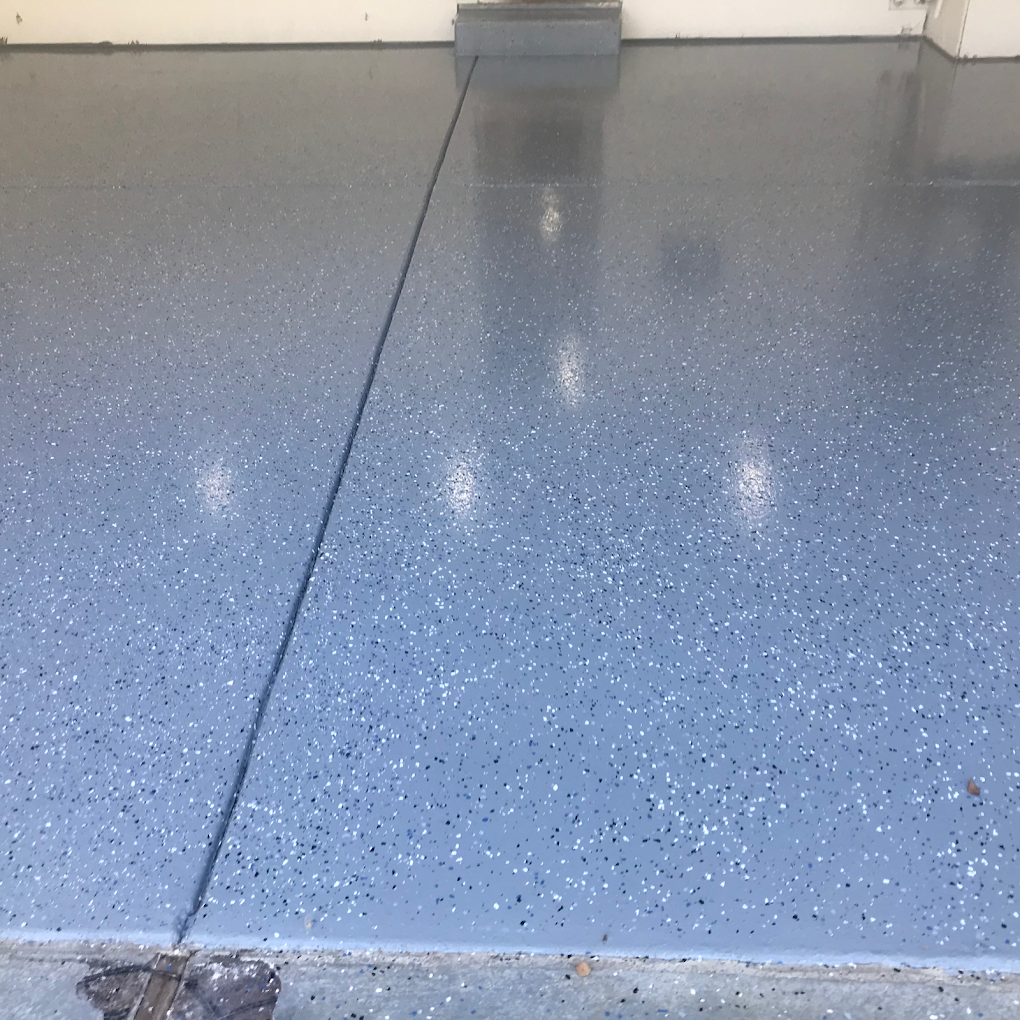
Epoxy Floor Coating ($4 to $8 per square foot)
A professional epoxy coating transforms a stained, cracked concrete floor into a clean, durable, easy-to-sweep surface. It resists road salt, oil stains, and hot tire marks — all common issues in Chicagoland garages. A two-car garage typically costs $1,600 to $3,200 for a professional application.
Interlocking Floor Tiles ($3 to $6 per square foot)
A faster, DIY-friendly alternative to epoxy. Tiles snap together over existing concrete without adhesive. They hide imperfections and come in various colors and patterns. However, dirt and moisture can get between tiles over time.
Step 4: Add Proper Lighting
Most garages have a single bulb in the center — hopelessly inadequate. LED shop lights (4-foot linkable fixtures) provide bright, even coverage. Install three to four fixtures across the ceiling for a two-car garage. Cost: $30 to $50 per fixture, or $200 to $400 for professional installation of a complete lighting system.
What a Garage Transformation Costs
- Basic organization (slatwall on one wall, hooks, one overhead rack): $800 to $1,500
- Mid-range makeover (slatwall, workbench, overhead storage, lighting): $2,000 to $4,000
- Complete transformation (full slatwall, cabinets, workbench, epoxy floor, lighting): $5,000 to $10,000
CrestLine Home Pro designs and installs complete garage organization systems. We measure your space, plan the layout around your specific storage needs, and handle everything from slatwall installation to epoxy coating.