Your water heater works silently in the background until the day it does not. Most tank water heaters last 10 to 15 years, and when they fail, it is usually at the worst possible time — a holiday weekend, the morning of a big event, or (most dramatically) with a flood in the utility closet.
If your water heater is approaching the end of its life, planning a proactive replacement saves you from emergency service premiums and potential water damage. Here is what Chicagoland homeowners need to know about their options in 2026.
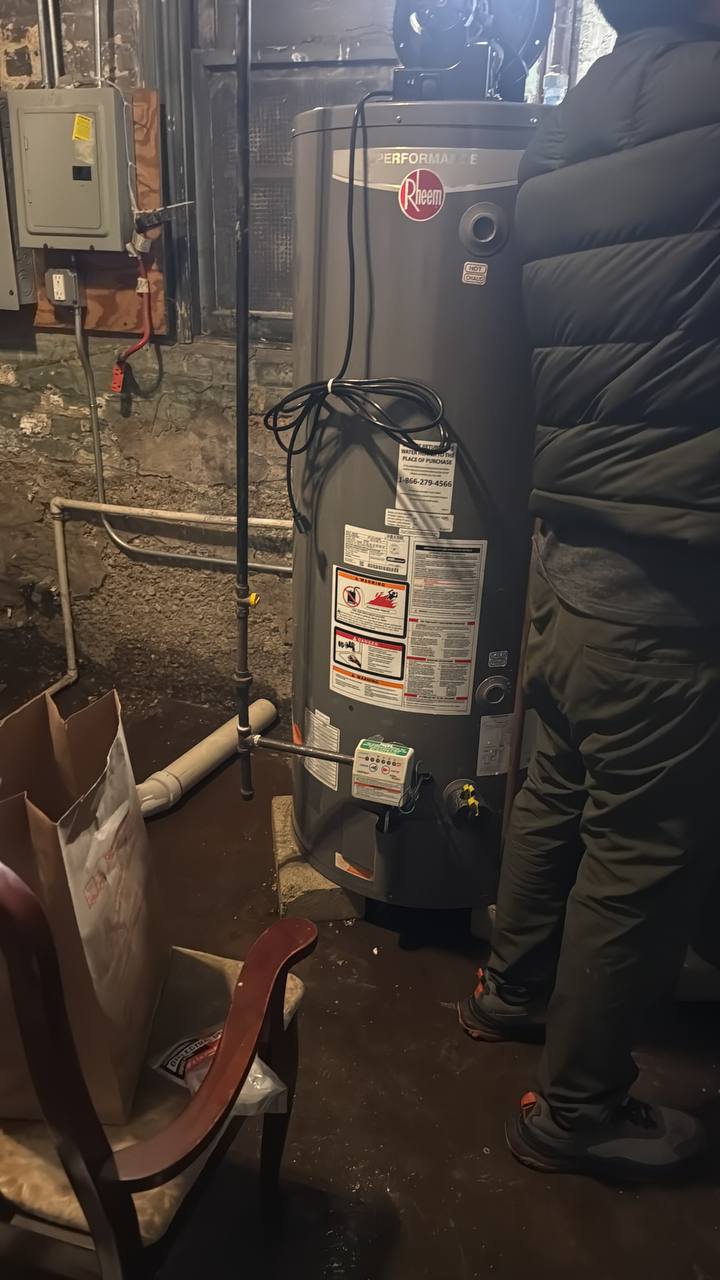
Tank Water Heaters
Cost installed: $1,200 to $2,500 (40-50 gallon, gas or electric)
Lifespan: 10 to 15 years
How They Work
A tank water heater maintains a reservoir of hot water (typically 40 to 50 gallons for a 3-4 bedroom home) ready for use at any time. When you draw hot water, cold water enters the bottom of the tank and is heated by a gas burner or electric element.
Pros
- Lower upfront cost
- Simple, proven technology — easy to service and repair
- Works with existing gas and water connections in most homes
- Provides hot water to multiple fixtures simultaneously without flow rate concerns
Cons
- Standby energy loss — the tank heats water 24/7, even when you are not using it
- Can run out during heavy use (back-to-back showers, laundry, dishwasher)
- Larger physical footprint
- Shorter lifespan than tankless
Tankless Water Heaters
Cost installed: $3,000 to $5,500 (gas-fired whole-house unit)
Lifespan: 20 to 25 years
How They Work
Tankless heaters heat water on demand as it flows through the unit. When you open a hot water tap, cold water enters the unit and is heated instantly by a high-powered gas burner or electric element.
Pros
- Endless hot water — never runs out, no matter how many showers
- 20 to 30 percent energy savings by eliminating standby heat loss
- Compact wall-mounted design frees up floor space
- Longer lifespan (20-25 years vs. 10-15 for tank)
Cons
- Higher upfront cost — typically 2x to 3x a tank unit
- May require gas line upgrade (larger gas line for higher BTU demand)
- Requires new venting (direct vent through wall)
- Flow rate limitations — simultaneous high-demand use can exceed capacity
- Annual descaling required, especially with hard water (common in Chicagoland)
Which Is Right for Your Home?
Choose a tank if: You want the lowest upfront cost, your current setup works well, and your household has moderate hot water demand (2-3 people).
Choose tankless if: You have a large household (4+ people), want to maximize energy efficiency, plan to stay in your home long-term, and have room in the budget for the higher upfront cost.
Illinois-Specific Considerations
- Natural gas availability — Most Chicagoland homes have natural gas, making gas-fired water heaters the most cost-effective option for both tank and tankless.
- Hard water — Chicagoland water is moderately hard. Tankless units require annual flushing with vinegar to prevent scale buildup. Consider a water softener if you go tankless.
- Permits — Most Illinois municipalities require a plumbing permit for water heater replacement. CrestLine handles the permit process.
- Energy rebates — Check with Nicor Gas and ComEd for current rebates on high-efficiency water heaters. Rebates of $100 to $300 are common for qualifying models.
CrestLine Home Pro installs both tank and tankless water heaters. We assess your household's hot water demand, evaluate your existing gas and venting setup, and recommend the best option for your situation.
Call (630) 812-7247 or request a free water heater consultation.